免费短视频分享大全 - 大中国 免费短视频分享大全 - 大中国
游客
海报背景
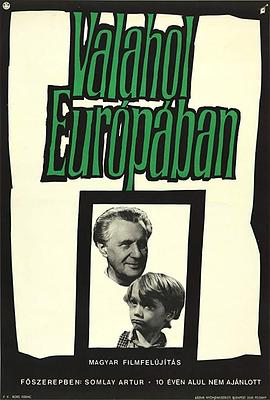
欧洲的某个地方海报图片

欧洲的某个地方

备注 :已完结
更新 :2025-08-05 10:48:08
1948·其它·剧情 ·1948-11-19上映·其它·
立即播放
收藏
10.0
网友评分
  • 很差
  • 较差
  • 还行
  • 推荐
  • 力荐
7.4 362次评分
  • 很差
  • 较差
  • 还行
  • 推荐
  • 力荐
扫描观看

扫描一扫app播放

Somewhere in the remote region, the war ends. In the midst of ruined cities and houses in the streets, in rural hamlets, everywhere where people still live, are children who have lost their homes and parents. Abandoned, hungry, and in rags, defenseless and humiliated, they wander through the world. Hunger drives them. Little streams of orphans merge into a river which rushes forward and submerges everything in its path. The children do not know any feeling; they know only the world of their enemies. They fight, steal, struggle for a mouthful of food, and violence is merely a means to get it. A gang led by Cahoun finds a refuge in an abandoned castle and encounters an old composer who has voluntarily retired into solitude from a world of hatred, treason, and crime. How can they find a common ground, how can they become mutual friends The castle becomes their hiding place but possibly it will also be their first home which they may organize and must defend. But even for this, the price will be very high.  To this simple story, the journalist, writer, poet, scriptwriter, movie director, and film theoretician Béla Balázs applied many years of experience. He and the director Géza Radványi created a work which opened a new postwar chapter in Hungarian film. Surprisingly, this film has not lost any of its impact over the years, especially on a profound philosophical level. That is to say, it is not merely a movie about war; it is not important in what location and in what period of time it takes place. It is a story outside of time about the joyless fate of children who pay dearly for the cruel war games of adults.  At the time it was premiered, the movie was enthusiastically received by the critics. The main roles were taken by streetwise boys of a children's group who created their roles improvisationally in close contact with a few professional actors, and in the children's acting their own fresh experience of war's turmoil appears to be reflected. At the same time, their performance fits admirably into the mosaic of a very complex movie language. Balázs's influence revealed itself, above all, in the introductory sequences an air raid on an amusement park, seen in a montage of dramatic situations evoking the last spasms of war, where, undoubtedly, we discern the influence of classical Soviet cinematography. Shooting, the boy's escape, the locomotive's wheels, the shadows of soldiers with submachine guns, the sound of a whistle—the images are linked together in abrupt sequences in which varying shots and expressive sharp sounds are emphasized. A perfectly planned screenplay avoided all elements of sentimentality, time-worn stereotypes of wronged children, romanticism and cheap simplification. The authors succeeded in bridging the perilous dramatic abyss of the metamorphosis of a children's community. Their telling of the story (the scene of pillaging, the assault on the castle, etc) independently introduced some neorealist elements which, at that time, were being propagated in Italy by De Sica, Rossellini, and other film artists. The rebukes of contemporary critics, who called attention to formalism for its own sake have been forgotten. The masterly art of cameraman Barnabás Hegyi gives vitality to the poetic images. His angle shots of the children, his composition of scenes in the castle interior, are a living document of the times, and underline the atmosphere and the characters of the protagonists. The success of the picture was also enhanced by the musical art of composer Dénes Buday who, in tense situations, inserted the theme of the Marseilaise into the movie's structure, as a motive of community unification, as an expression of friendship and the possibility of understanding.  Valahol Europaban is the first significant postwar Hungarian film. It originated in a relaxed atmosphere, replete with joy and euphoria, and it includes these elements in order to demonstrate the strength of humanism, tolerance, and friendship. It represents a general condemnation of war anywhere in the world, in any form.
展开

无模块

资源列表

排序

相关明星

相关影片

更多
超级仓鼠3:松鼠奇谋
A little girl has secret superpowers but can’t use them when a highway project is threatening the ne
森英恵蝴蝶之外
八木莉可子,中岛裕翔
超越鼓丘
迈克尔·科瓦尔斯基,Morgan DeTogne,Daniel Titmuss,Emma Jessop
龙口走蛟
袁福福,黄允桐,许文广,钱漪,梁超,胡啸
多米尼克凤凰崛起
多米尼克是一名训练有素的杀手,她为了摆脱过去的束缚,试图在南美开始新的生活。然而随着意外发生,她发现自己来到了一个充斥着暴力和腐败的小城。面对沆瀣一气的警察和犯罪集团的残暴袭击,多米尼克必须决定是保护自己,还是保护收留她的无辜家庭……
海之味
《海之味》是一部以海鲜美食为主题的纪录片,聚焦大海与餐桌之间的奇妙联系。影片深入福建沿海的渔港,探索这片海域如何孕育出令人垂涎的美味佳肴。渔民用世代相传的智慧捕捞海产,将新鲜的海味转化为一道道令人惊叹
北逃
逃北者 / Crossing
横纹刀劈扭纹柴
麻辣豆腐/Just Married/天生一对
致命抉择
拉伊莎·康德拉基,Steve Byers,Laura Provenzano
国家韦恩:念旧
Wayne Colley,Tamara Stackhouse,Lauren Cadogan,Savannah Gurule
长白山
十年之约,共赴长白  纪录片《长白山》以多维视角解锁这座东北名山的自然与人文密码。镜头循着一本百年前的老相册《灵迹全影》,回溯长白山往昔的原始风貌,定格时光留下的印记。同时,深入探索其独特地理肌理:从
厨师姐妹花
奥娜和萨乌莱是一对好朋友,也是热爱烹饪的厨师,她们被迫在当地一家名为“美味”的食堂打工。奥娜是一位单身母亲,萨乌莱则是一位来自乡村、热情洋溢的女孩。一天,萨乌莱为她们报名参加了一场全国电视烹饪比赛,大
BTS The Comeback 演唱会:Arirang
金南俊,金硕珍,闵玧其,郑号锡,朴智旻,金泰亨,田柾国
婚头转向2025
Wed or Wait,Yakin Nikah
年轻的妻子
拉维·西蒙尼,科雷西·克莱门斯,朱迪斯·赖特,麦可拉·沃金丝,阿雅·卡什
再度竞选
托尼·丹扎,贝克斯·泰勒-克劳斯,亚当·桑德斯
防弹少年团 BTS The Comeback 演唱会
金硕珍 , 闵玧其 , 郑号锡 , 金南俊 , 朴智旻 , 金泰亨 , 田柾国
  • 片名:欧洲的某个地方
  • 状态:已完结
  • 主演:Artúr Somlay Miklós Gábor Zsuzsa Bánki 
  • 导演:Radványi Géza 
  • 年份:1948
  • 地区:其它
  • 类型:剧情 
  • 频道:内详
  • 上映:1948-11-19
  • 语言:其它
  • 更新:2025-08-05 10:48
  • 简介:Somewhere in the remote region, the war ends. In the midst of ruined cities and houses in the streets, in rural hamlets, everywhere where people still live, are children who have lost their homes and parents. Abandoned, hungry, and in rags, defenseless and humiliated, they wander through the world. Hunger drives them. Little streams of orphans merge into a river which rushes forward and submerges everything in its path. The children do not know any feeling; they know only the world of their enemies. They fight, steal, struggle for a mouthful of food, and violence is merely a means to get it. A gang led by Cahoun finds a refuge in an abandoned castle and encounters an old composer who has voluntarily retired into solitude from a world of hatred, treason, and crime. How can they find a common ground, how can they become mutual friends The castle becomes their hiding place but possibly it will also be their first home which they may organize and must defend. But even for this, the price will be very high.  To this simple story, the journalist, writer, poet, scriptwriter, movie director, and film theoretician Béla Balázs applied many years of experience. He and the director Géza Radványi created a work which opened a new postwar chapter in Hungarian film. Surprisingly, this film has not lost any of its impact over the years, especially on a profound philosophical level. That is to say, it is not merely a movie about war; it is not important in what location and in what period of time it takes place. It is a story outside of time about the joyless fate of children who pay dearly for the cruel war games of adults.  At the time it was premiered, the movie was enthusiastically received by the critics. The main roles were taken by streetwise boys of a children's group who created their roles improvisationally in close contact with a few professional actors, and in the children's acting their own fresh experience of war's turmoil appears to be reflected. At the same time, their performance fits admirably into the mosaic of a very complex movie language. Balázs's influence revealed itself, above all, in the introductory sequences an air raid on an amusement park, seen in a montage of dramatic situations evoking the last spasms of war, where, undoubtedly, we discern the influence of classical Soviet cinematography. Shooting, the boy's escape, the locomotive's wheels, the shadows of soldiers with submachine guns, the sound of a whistle—the images are linked together in abrupt sequences in which varying shots and expressive sharp sounds are emphasized. A perfectly planned screenplay avoided all elements of sentimentality, time-worn stereotypes of wronged children, romanticism and cheap simplification. The authors succeeded in bridging the perilous dramatic abyss of the metamorphosis of a children's community. Their telling of the story (the scene of pillaging, the assault on the castle, etc) independently introduced some neorealist elements which, at that time, were being propagated in Italy by De Sica, Rossellini, and other film artists. The rebukes of contemporary critics, who called attention to formalism for its own sake have been forgotten. The masterly art of cameraman Barnabás Hegyi gives vitality to the poetic images. His angle shots of the children, his composition of scenes in the castle interior, are a living document of the times, and underline the atmosphere and the characters of the protagonists. The success of the picture was also enhanced by the musical art of composer Dénes Buday who, in tense situations, inserted the theme of the Marseilaise into the movie's structure, as a motive of community unification, as an expression of friendship and the possibility of understanding.  Valahol Europaban is the first significant postwar Hungarian film. It originated in a relaxed atmosphere, replete with joy and euphoria, and it includes these elements in order to demonstrate the strength of humanism, tolerance, and friendship. It represents a general condemnation of war anywhere in the world, in any form.
公告

hello~欢迎访问一起追剧,如果资源无法播放请切换线路或等待管理修复,优先修复热播影视。

下载app享受急速观影

《备用网址1》 《备用网址2》 《加入群》

视频
搜索历史
删除
热门搜索
本地记录 云端记录
登录账号